
Cuebric
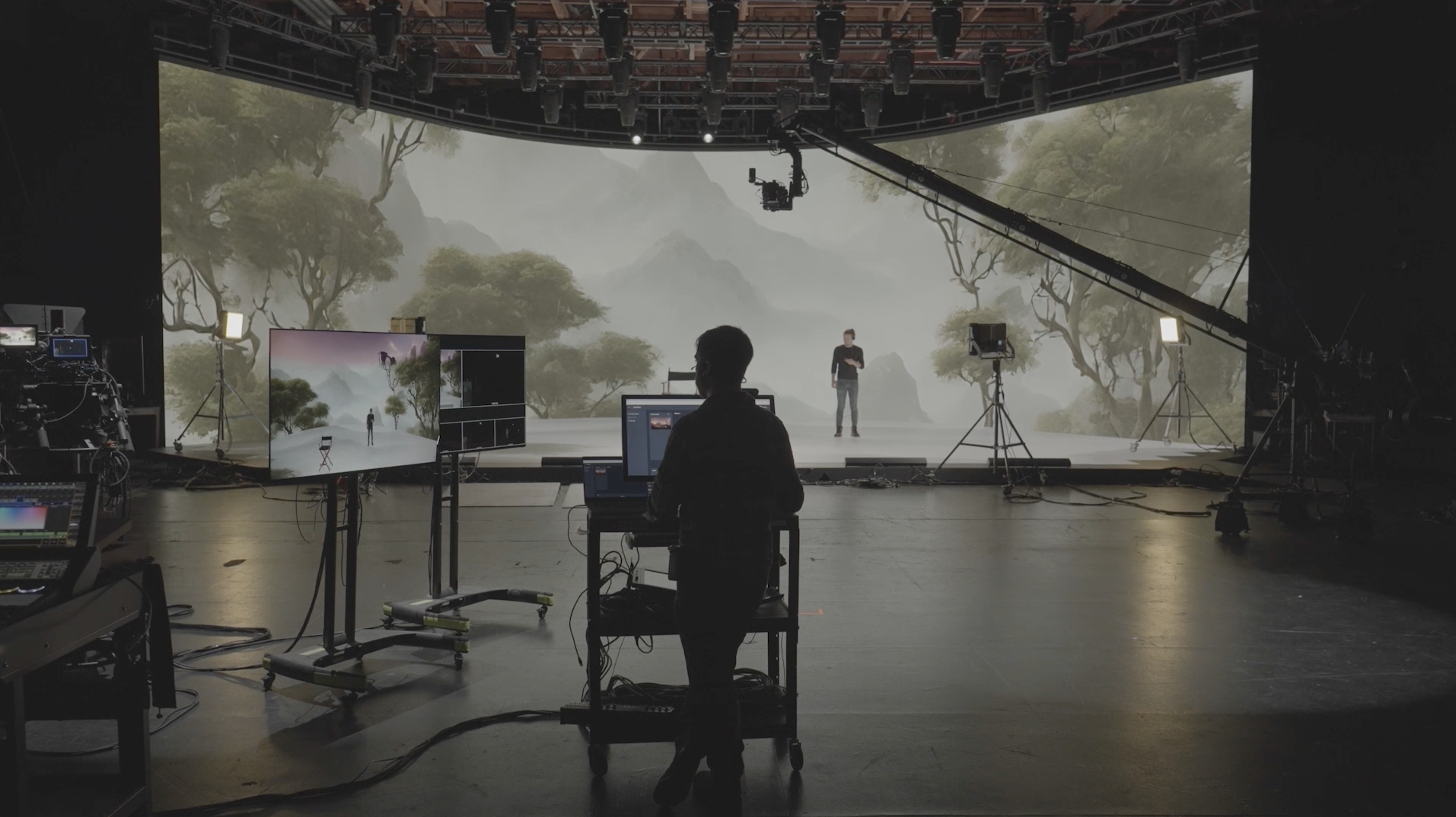
Cuebric is a generative AI tool built for virtual production, turning prompts into fully segmented, photorealistic environments for film, television and advertising. The product is currently unreachable while its maker rebuilds it as a broader creative platform.
What is Cuebric?
Cuebric is a generative AI tool created for virtual production. It is published by Cuebric, Inc., a Massachusetts company that also trades under the Seyhan Lee name, and it was built so that filmmakers could describe an environment and receive a photorealistic backdrop within minutes, a promise the site condenses into the trademarked phrase From Concept To Camera.
What set the product apart was not the image generation itself but the way it delivered the result. Its terms describe the outputs as fully segmented virtual environments: rather than a flat picture, the tool returns a scene split into separate layers that a crew can move, relight and composite. That is what makes an AI backdrop usable on a stage or in a compositing suite, and it explains the company's partner line-up, which mixes advertising groups such as WPP, Hogarth and TBWA with the software a virtual production actually runs on: Disguise, NVIDIA Omniverse, Assimilate, Pixera and Nuke. The work drew unusual attention for a company of this size, and the site points to segments and coverage on 60 Minutes, Bloomberg, Variety, Business Insider, the NVIDIA blog, the American Society of Cinematographers and British Cinematographer.
The important caveat is the present tense. As of August 2026, the product cannot be reached. The application subdomain no longer has a DNS record, and the pricing, contact, prompt guide and release notes pages all return 404. What remains at cuebric.com is a single teaser page, announcing that the company is building tools for a new era of storytelling and that Cuebric is evolving into a creative operating system for the age of AI, an agent-driven platform meant to unite video tools, 3D engines and workflow automation. The company positions itself as Indie in Spirit. Epic in Vision. and says it is building alongside filmmakers and content creators. No shutdown was ever announced, and no date has been given for the successor. Cuebric today is therefore a company in transition rather than a tool you can pick up and use.
What it does
- Generate photorealistic virtual environments from a text or image prompt
- Deliver each scene as fully segmented, separately editable depth layers
- Produce backdrops and creative assets for preproduction and production
- Feed generated environments into a virtual production or compositing pipeline
- Iterate on a set design in minutes instead of days
When to use Cuebric / When not to
A quick filter to help you decide if Cuebric is the right fit.
When to use Cuebric
- Film and television productions looking to replace location shoots or built sets with AI-generated backdrops
- Advertising agencies and brand teams that need campaign visuals produced at speed
- Virtual production crews already working with Disguise, Pixera or NVIDIA Omniverse
- VFX artists and compositors who need environments delivered as separate depth layers
- Independent creators and small studios wanting cinematic scale without a location budget
When not to use Cuebric
- Anyone who needs a working tool today, since the application is currently unreachable
- Teams that must know the price before committing, as no figures are published anywhere
- European organisations processing personal data, which the terms explicitly forbid
- Developers wanting to automate through an API, as none is documented
- Buyers who require security assurances such as SOC 2, ISO 27001 or a signed DPA
How to use Cuebric
A typical end-to-end flow, from setup to results.
- Open cuebric.com, which currently serves a single page presenting the company's next product
- Note that the historical signup and login paths on app.cuebric.com no longer resolve
- Use the Get in Touch panel to reach the team at maria.juliano@cuebric.com
- Join the newsletter from the homepage form to be notified when the new platform opens
- Historically, you created an account on the access-controlled web application
- Historically, you selected the Silver or Gold tier, billed monthly or annually
- Historically, you described the environment you wanted and generated it
- Historically, you retrieved the result as separate layers for compositing or stage playback
- Write to support@cuebric.com for account, privacy or model-training opt-out requests
Pros & Cons
Pros
- Full intellectual property in the generated outputs stays with the customer
- Written commitment never to sell, share or disclose customer outputs to third parties
- No sale of personal data and no sharing for cross-context behavioural advertising
- Explicit opt-out from model training, with a named contact address
- A data protection officer is identified and reachable
- Unlimited AI and GPU usage announced on both tiers
- Credible technical ecosystem and press record, from Disguise and Nuke to 60 Minutes and Bloomberg
Cons
- The product is unreachable: the application subdomain has no DNS record and the product pages return 404
- No public pricing at all; the terms name Silver and Gold without a single figure or currency
- The legal pages return 404 on direct access and exist only inside the JavaScript bundle
- The terms forbid EU, EEA and Swiss personal data while the privacy policy builds a GDPR framework
- No security documentation: no SOC 2, no ISO 27001, no DPA and no subprocessor list
- The terms disclaim any guarantee of quality, stability, uptime or reliability
- No API, no mobile application, a single interface language and no published timeline for the successor
Pricing & Plans
Cuebric does not publish any price. Its terms and conditions describe two paid tiers, Silver, granted subject to a monthly or annual fee being paid, and Gold, granted subject to the account being current, but no amount and no currency appear anywhere on the site, and the pricing page itself now returns 404. No permanent free plan and no free trial are documented, while professional services and further training are noted as carrying additional fees.
- single-user licence billed as a monthly or annual fee
- unlimited layers
- access to all features on the Cuebric website
- unlimited AI and GPU usage
- email support
- price not published
- unlimited projects and unlimited layers
- access to all features on the Cuebric website
- unlimited AI and GPU usage
- email support
- Introduction to Cuebric Training included
- optional professional services and further training at additional cost
- price not published
Data, GDPR & hosting
A consolidated view of how Cuebric handles your data.
GDPR overview
Cuebric's privacy policy carries a genuine GDPR section. It names a controller for UK and EU purposes, Seyhan Lee, 139 Draper Rd, Wayland, MA 01778; it lists rights of access, erasure, rectification, portability, restriction, objection, withdrawal of consent and complaint to a supervisory authority; and it states its lawful bases, namely performance of the contract, legitimate interests including model training, consent and legal obligation. Transfers out of the EEA, Switzerland and the UK are said to rely on a legally valid mechanism, with safeguards available on request, and a data protection officer is reachable at support@cuebric.com. Two gaps matter. No Article 27 EU representative is designated and the declared controller address is American. And the terms flatly forbid submitting the personal data of anyone located in the EU, EEA or Switzerland, which contradicts the policy's own framework.
Who owns the data?
Under Cuebric's terms, customer data submitted to the service remains the sole property of the customer or its users, and the intellectual property in generated outputs belongs solely and exclusively to the customer, with Cuebric explicitly disclaiming any ownership claim. The customer grants Cuebric a non-exclusive licence to use, copy, store, transmit and display that data only as far as needed to provide and maintain the service, verify compliance and meet legal obligations. Separately, and on express written consent, Cuebric takes a perpetual, royalty-free licence over submitted prompts and generated outputs strictly for internal model training, undertaking never to disclose, display, distribute or commercialise them.
Reuse rights
Customers may reuse everything they generate without asking Cuebric for permission: the terms assign all intellectual property in the outputs solely and exclusively to the customer, provided they were created in line with the agreement, and Cuebric lays no ownership claim over them. Commercial use, editing and distribution therefore sit with the customer, who is also solely responsible for the accuracy, quality and legality of whatever was submitted in the first place. The limits are behavioural rather than proprietary: no harassing, violent or self-harm content, no unlawful collection of personal data, no building or marketing a competing product, no resale or sublicensing of the service, and no reverse engineering. Cuebric advises consulting your own counsel on the legal status of AI-generated work in your jurisdiction.
Data retention & training
Hosting summary
Cuebric states that personal information is processed and stored in its facilities and servers in the United States, and may be disclosed to service providers and affiliates in other jurisdictions. For transfers out of the EEA, Switzerland and the United Kingdom, the policy promises appropriate safeguards and a legally valid transfer mechanism, with a copy available on request. Beyond that, the hosting detail is thin: no cloud provider is named, no data centre region is specified, no certification such as SOC 2 or ISO 27001 is claimed, and no data processing agreement is offered. Two third parties are named as handling user data, Hotjar, which builds a pseudonymised behavioural profile and is contractually barred from selling it, and Google Analytics, but no formal subprocessor list is published. The marketing site itself resolves to 34.120.159.18, an anycast address on Google infrastructure, which says nothing about where customer projects were stored.
Where Cuebric works
Country-level availability.
Not available in
Things to keep in mind
Risks and trade-offs to weigh before adopting Cuebric.
- The service can be modified, suspended or terminated at any time, without notice and without liability
- Cuebric has no obligation to retain customer data, so work that was never exported can simply disappear
- Content submitted is used to train the models by default, and opting out requires sending an email
- The contradiction between the privacy policy and the terms leaves European users legally exposed
- No Article 27 representative is designated and the declared controller address is in the United States
- Leaning on generated environments uncritically can erode a production team's own craft judgement
- Names displayed as partners are not documented technical integrations, so no supported pipeline should be assumed
Setup & Integrations
Technical difficulty
In principle Cuebric required no technical skill. It ran as an access-controlled web application, with an account to create and nothing to install, and the site promises a creative environment without the code, cost or complexity. The Gold tier bundled an introductory training session, with professional services available at extra cost. In practice the question is moot today: the application subdomain no longer resolves and no signup path is reachable from the site, so setup difficulty cannot be assessed on the current product.
Deployment
Integrations
Behind Cuebric
Social
Resources
All the official URLs gathered for verification and reference.
Frequently asked questions
Can I use Cuebric today?
What did Cuebric actually do?
How much does it cost?
Who owns the images I generate?
Is my content used to train the models?
Is there a minimum age?
Where is my data hosted?
Is there an API or a mobile app?
Who is behind Cuebric?
How do I contact the team?
Should you pick Cuebric?
Cuebric earned its reputation honestly. Few AI companies of its size have been covered by 60 Minutes, Bloomberg and Variety, and fewer still shipped something a film crew could put on a stage: not a flat generated image, but an environment split into separate layers that survives relighting and compositing. Its terms are also unusually generous where it matters most to creative professionals. The intellectual property in everything you generate is yours, Cuebric explicitly disclaims ownership, and it commits never to sell, share or disclose your outputs.
The problem is that none of this is available today. The application subdomain has no DNS record, the pricing and contact pages return 404, and the site has been reduced to a single page announcing a successor with no release date. The legal documents are still live, but only inside the JavaScript bundle: request them directly and the server answers 404. Prices were never restored either, and the terms name a Silver and a Gold tier without a single figure.
There are also loose ends a buyer should not ignore. The privacy policy builds a full GDPR framework, with a named controller, data subject rights, lawful bases and transfer safeguards, while the terms forbid submitting the personal data of anyone in the EU, EEA or Switzerland. Both cannot be true at once. Nothing is published on security: no SOC 2, no ISO 27001, no data processing agreement, no subprocessor list. Training on customer content is the default, with opt-out only by email.
Treat Cuebric as a company to watch rather than a tool to adopt. The team is credible and the direction is coherent, but as of August 2026 there is nothing to sign up for.
- Choosing a selection results in a full page refresh.
- Opens in a new window.