
Daft Art
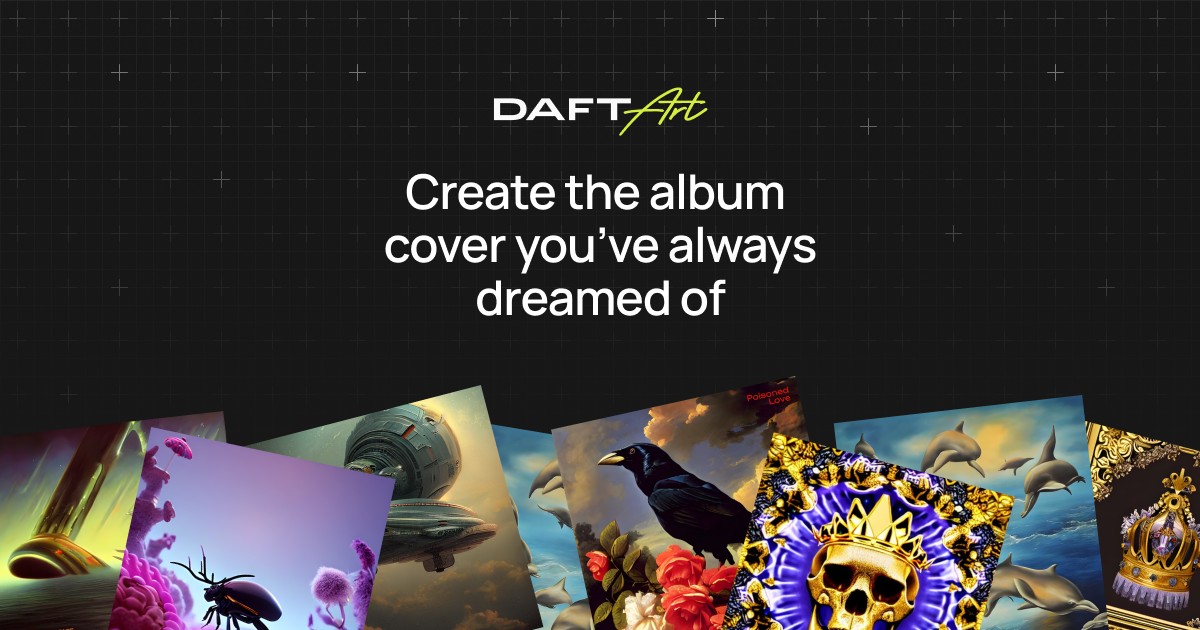
Daft Art is a web-based AI album cover generator for musicians, producers and podcasters. Curated aesthetics guide the artwork, a simple editor adds the title and artist name, and exports land at 3000x3000 pixels, ready for distribution.
What is Daft Art?
Daft Art is a web application that turns a written idea into a finished album cover. It bills itself as a premium AI album cover generator, and the scope is deliberately narrow: it makes square artwork for music releases, and nothing else. There is no music generation, no video, and no general-purpose image tool hiding behind it.
The workflow has four steps. You pick one of the platform's curated aesthetics, describe the cover you want, generate, and repeat until something lands. Those aesthetics are the product's central argument, and the homepage states the reasoning bluntly: AI is powerful but it has no taste. Rather than leaving you to fight a blank prompt box, Daft Art narrows the visual space to styles that already read as a record sleeve.
Once an image is right, a built-in editor handles the part most generators ignore. You add the album or track title and the artist name, then adjust the font, the text colour and the overall styling. The result downloads at 3000x3000 pixels in the correct square ratio, the specification distribution and streaming platforms expect, so the file goes straight to upload without a detour through image software. The site sums the experience up as no setup, configuration, or hardware required.
The audience named on the site is musicians, producers, bands, podcasters and artists. Access is sold as time-limited passes rather than a subscription: 7, 30 or 180 days, each with unlimited generations and every feature included, so no capability is held back for a higher tier. Rights stay with the user, since Daft Art states it holds no claim on the covers produced.
The product itself lives at studio.daftart.com, while the marketing site runs to four pages. What is absent is worth knowing: no API, no mobile app, no team page, no company address and no blog. A section titled Release-Ready Workflow displays distribution-platform logos, but those illustrate where finished covers end up rather than any technical integration. The domain daftart.ai, which redirects to daftart.com, was registered in November 2022 and first archived days later.
What it does
- Generate an album cover from a written description
- Pick a curated aesthetic to steer the visual style before generating
- Regenerate as many times as you like until a result works
- Add the album or track title and the artist name in the built-in editor
- Adjust font, text colour and overall styling on the artwork
- Download at 3000x3000 pixels in the square ratio distributors expect
- Save covers and download them again at any time
When to use Daft Art / When not to
A quick filter to help you decide if Daft Art is the right fit.
When to use Daft Art
- Independent artists releasing a single or an EP with no budget for a cover designer
- Producers with several releases close together, who get unlimited generations for the length of a 30 or 180-day pass
- Podcasters who need a square cover image and have no design software
- Musicians who want the title and artist name set directly on the artwork, without opening an image editor
- Anyone who needs a 3000x3000 file that meets distribution specifications on the first try
When not to use Daft Art
- Developers looking for an API or programmatic access, which the tool does not offer at all
- Anyone who wants to work from a phone or tablet app, as there is no iOS or Android release
- Teams that need shared workspaces, roles or collaborative review on artwork
- Musicians hoping to generate the music itself, since the tool only produces the cover
- Labels and agencies that require a data processing agreement, a subprocessor list or a security certification before adopting a vendor
How to use Daft Art
A typical end-to-end flow, from setup to results.
- Open the studio from the homepage button, which leads to studio.daftart.com/create
- Create an account with an email address
- Buy a pass, since the FAQ states that creating covers requires paid access
- Choose a curated aesthetic that matches the mood of the music
- Describe the cover you have in mind in plain text
- Generate, and regenerate as many times as needed until a version works
- Add the album or track title and the artist name in the editor
- Set the font, the text colour and the overall styling
- Download the finished cover at 3000x3000 pixels
- Come back to your saved covers later to download them again
Pros & Cons
Pros
- Every feature is included in every pass, so nothing is held back for a higher tier
- Unlimited generations for the length of the pass, which suits iterative work
- One-time payment with no subscription and no announced auto-renewal on the pricing page
- Output already matches distribution specifications at 3000x3000 pixels in a square ratio
- The user keeps the rights to the covers, with no claim retained by the vendor
- Low entry cost at USD 9.97, and no design skills or installation required
- The privacy policy explicitly rules out advertising, trackers and monetising user data
Cons
- Access expires with the pass, so a purchase buys time rather than a permanent licence
- The site contradicts itself on free access: a 'Try for free' button and a free tier in the terms, against a FAQ stating the tool is no longer free to use
- The terms describe a renewing monthly subscription that the pricing page explicitly denies, which means the legal documentation has not been updated
- No refunds, as the terms state that fees paid are non-refundable
- No API and no mobile app, which limits the tool to browser use
- No company name beyond the brand, no postal address and no named team, so there is no identifiable counterparty beyond an email address
- No data processing agreement, no subprocessor list, no certification and no named hosting country
Pricing & Plans
There is no permanent free plan. The FAQ states that Daft Art is no longer free to use and that paid access is required to create album covers, even though the homepage still displays a 'Try for free' call to action and the terms still refer to a free tier. Access is sold as one-time, time-limited passes rather than as a subscription. The lowest price point is USD 9.97 for a 7-day pass, which includes unlimited generations and every feature.
- unlimited album covers for 7 days
- all features included
- presented as suited to quick projects
- unlimited album covers for 30 days
- all features included
- presented as suited to multiple releases
- unlimited album covers for 180 days
- all features included
- presented as the best value for frequent users
- All passes include premium curated aesthetics
- high-resolution release-ready export
- the title editor
- saved covers available for download at any time
- and no subscription
Data, GDPR & hosting
A consolidated view of how Daft Art handles your data.
GDPR overview
Daft Art's privacy policy engages with the GDPR concretely rather than in passing. It names the regulation, grants EEA, UK and Swiss users the rights to correction, erasure, objection, portability and withdrawal of consent, and sets out the lawful bases it relies on: performance of the contract, legitimate interests covering security and abuse prevention, and consent. It goes further than most by extending the core GDPR and CCPA rights to every user regardless of location. Requests go to privacy@daftart.ai, with an acknowledged right to complain to a supervisory authority. Three gaps stand out: no EU representative is designated under Article 27, no data protection officer is named, and the policy carries neither an effective date nor a version number, so a reader cannot tell which version currently applies.
Who owns the data?
Daft Art states plainly that it holds no claim on the covers you generate: the artwork is yours, and the FAQ says you are free to use it however you want. The company retains a different category of material — the files, photos and documents you send are collected and kept in order to deliver the service. The terms add one reservation that matters commercially. Because the covers come out of AI systems, they may unintentionally resemble copyright-protected work or trademarks held by others, and rights holders can file a DMCA claim at yo@daftart.ai. Checking a cover for that risk before a release remains your responsibility, not the vendor's.
Reuse rights
Reuse is unrestricted and requires no permission. The FAQ is unambiguous on the point: Daft Art does not hold any claim on the album covers produced, and you are free to use them in whatever you want. Nothing in the terms narrows that to personal use, caps the number of releases, or demands attribution, so putting a generated cover on a commercial release distributed to streaming and download platforms is covered. The single practical constraint is legal rather than contractual. The terms warn that AI-produced assets may unintentionally resemble protected material or trademarks, which means the burden of clearing a cover before it ships sits with the user.
Data retention & training
Hosting summary
Daft Art names no hosting country and no hosting region. The privacy policy addresses the question only in general terms, stating that as part of normal operations your information may be stored on computers in countries outside your own, and that supplying your information is taken as consent to that transfer. No transfer mechanism is cited, so there is no mention of standard contractual clauses or of an adequacy decision. No subprocessor is named and no subprocessor list is published, although the policy does refer to third-party service providers bound to an equivalent level of protection. Security measures are described as physical, business and technical, without detail, with a commitment to notify users in the event of a breach. One technical observation sits outside the policy and should not be read as a hosting location: the domain resolves to an anycast address on Cloudflare's network, which indicates a content delivery network rather than where data is stored.
Things to keep in mind
Risks and trade-offs to weigh before adopting Daft Art.
- The site contradicts itself on free access, and the terms still describe a renewing monthly subscription that the pricing page denies: read the FAQ and the pricing page together before paying
- Passes expire. It is easy to buy 180 days as if buying software, then find access gone; fees are non-refundable and the terms allow the service to be modified, suspended or discontinued at any time
- The terms warn that AI-generated assets may unintentionally resemble copyright-protected work or trademarks held by others, and clearing a cover before a commercial release is the user's responsibility
- With no legal entity, no postal address and no named team published, there is no identifiable counterparty beyond an email address if something goes wrong
- No hosting country is named, international transfers rest on consent deemed given by supplying your information, and the privacy policy carries no effective date, so you cannot tell which version applies
- Nothing is published about whether uploaded content is used to train models, and the data collected is broad for a tool of this kind, including geolocation, device identifiers and detailed usage data
- Leaning on curated aesthetics is efficient but narrowing: a catalogue of covers all drawn from the same preset styles risks looking interchangeable, and the visual identity work an artist would otherwise do gets skipped rather than solved
Setup & Integrations
Technical difficulty
Very low. Daft Art is a browser application and the site states that no setup, configuration or hardware is required. All that is needed is an email account and, according to the FAQ, a paid pass before covers can be created. There is no API key, no SDK and no integration to configure, and no graphic design skill is assumed since the aesthetics are preset and the editor is deliberately simple. The only real friction is commercial rather than technical: understanding that access runs for the duration of the pass.
Deployment
Behind Daft Art
Social
Resources
All the official URLs gathered for verification and reference.
Frequently asked questions
What is Daft Art?
How does it work?
Is Daft Art free?
How much does it cost?
Who owns the covers I create?
What resolution are the exports?
Is there an API or a mobile app?
How do I get in touch, and what is the minimum age?
Should you pick Daft Art?
Daft Art does one job and defines it tightly: a square, release-ready album cover, produced in minutes by someone with no design software and no design training. Within that boundary it is well judged. The curated aesthetics answer a real problem, since an open prompt box rarely produces something that reads as a record sleeve, and the built-in title editor covers the step most image generators leave to the user. Exporting at 3000x3000 in the right ratio means the file is ready for a distributor without an extra round trip, and the rights stay with the artist.
The pricing model deserves attention before purchase. Passes buy time, not a permanent licence: USD 99 buys 180 days, after which access ends. Fees are non-refundable. The site also contradicts itself in two places, promising a free try on the homepage while the FAQ says paid access is required, and describing a renewing monthly subscription in the terms that the pricing page explicitly denies. None of this is fatal, but it signals legal documentation that has not kept pace with the product.
Corporate transparency is the weakest point. No legal entity, no postal address, no named team, no hosting country and no effective date on the privacy policy. The policy itself is unusually clear on what the vendor will not do, extending GDPR and CCPA rights to all users regardless of location, yet it names no Article 27 representative and no data protection officer, publishes no subprocessor list, and offers no data processing agreement.
For an independent artist shipping a release next week, the arithmetic is easy and the tool is a sensible buy. For a label, an agency or anyone with a procurement checklist, the missing corporate and contractual footing is likely to be decisive.
- Choosing a selection results in a full page refresh.
- Opens in a new window.